
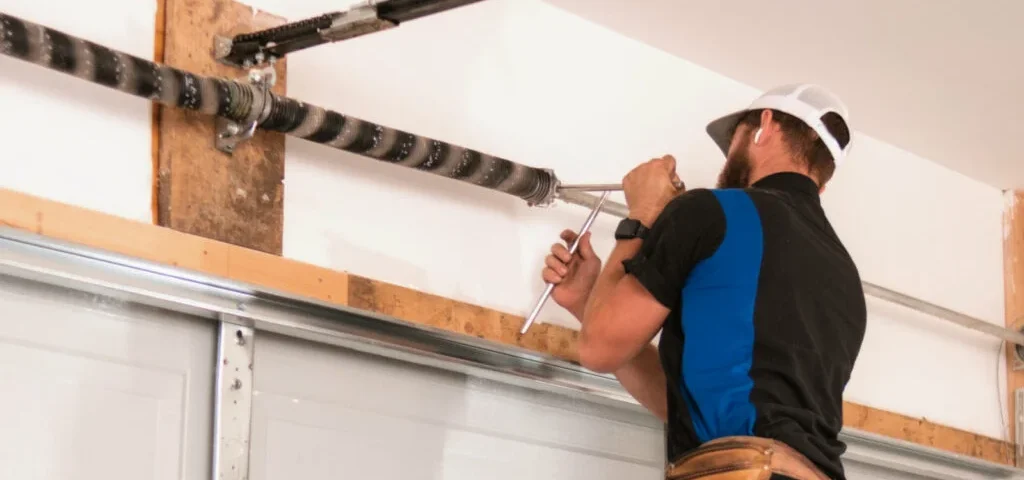
Imagine waking up to a beautiful winter morning, snow covering every inch of the landscape in your view. You press the button on your remote to open your garage door. But the door refuses to open. Suddenly, you hear a loud “crack”. You investigate and soon find out that the garage door spring has snapped.
If you find yourself helplessly trapped in this situation, seeking a professional Howard County garage door repair is your first step towards restoring home security and peace of mind.
Science Behind Spring Failure in Winters
In winters when temperatures drop, the molecular structure of the metallic spring contracts, making the spring less flexible and more susceptible to snapping. This phenomenon is called cold brittleness. Instead of bending smoothly when the door opens, the spring hardens, increasing the risk of a fracture. This risk increases even more if the spring is already nearing the end of its functional lifespan.
Here are some typical reasons why garage door springs break in winter-
- Thermal Fatigue: According to the Maryland State Archives, January temperatures in Maryland typically average around 34.1°F, but the Western parts can get even colder, where temperature gets as low as -15°F. These drastic fluctuations in temperature within a short time frame cause metal components of the garage door system to expand and contract rapidly, causing micro-fractures. These micro-fractures stress out the spring coils, which eventually leads to a complete snap.
- Impact of Cold Brittleness: When temperatures drop, metallic springs lose their natural elasticity and become fragile. Even though this process occurs at a microscopic level, its impact is felt by all the homeowners who feel it every winter. Much like cold plastic slabs, which break under pressure, cold metallic springs are far more likely to shatter under stress instead of bending.
- Humidity & Rusting: Maryland experiences high humidity due to its proximity to the Chesapeake Bay. More often than not, moisture gets trapped inside the tightly wound spring coils of the garage doors, where it cannot evaporate easily, leading to rust formation. This corrosion inside the spring causes friction, wearing the metal down over time until it finally gives up.
- Increased Corrosion from Roadway Salts: According to the Maryland State Archives, at the beginning of winter, Howard County prepares approximately 33,500 tons of salt and 87,500 gallons of brine for roadway maintenance. On the contrary these road salts are highly corrosive to metal and can damage garage door springs in nearby homes.
- Increased Strain on the Spring: In the first few days of snow in winter, homeowners usually fail to identify these symptoms of potential mechanical failure- squeaking sounds and sluggish garage door movements. These symptoms clearly indicate that the spring tension is no longer balanced for the weight of the door, and the opening motor has to work harder to compensate for it. This chain reaction is what leads to a garage broken spring in Columbia MD, in the winter.
- Added Weight of Ice on Doors: Snowing evening landscapes are a treat for the eyes. But it’s this very ice that is one of the archenemies of your garage door spring. During winters, your spring has to lift an additional load of that layer of ice on your garage door, which the spring wasn’t calibrated to lift, adding pounds of extra weight to the total load. This can lead to catastrophic spring failure, which in turn can cause life-threatening accidents.
- Internal Misalignment: Springs are the backbone of garage door systems. While they do the heavy lifting, the pulleys and the cables are under equal strain in Maryland winters. In low temperatures, all the metallic components of the garage door system contract, leading to misaligned door tracks. This misalignment might lead to a fraying cable or a failing pulley; either way, your spring has to compensate for it by absorbing the extra shock, increasing the risk of a mechanical failure.
- Hardened Lubrication: Usually, lubrication is the first line of defense in garage door systems. The reason? They reduce friction and facilitate smooth door movements. But in sub-zero temperatures, these lubricants freeze, trapping moisture and debris on the metallic spring surfaces, increasing the strain on the opening motor. This could lead to a catastrophic system failure.
- External Misalignment: In Maryland, between December and March, temperatures fluctuate from above 0°C (freezing point of water) to below 0°C. These fluctuations in temperatures cause the water which is stuck in soil and crevices to change states rapidly, causing the ground under roads and buildings to shift. This shift causes misalignment in the garage door tracks, leading to increased strain on the opening motor and springs.
Dangers of Mechanical Failure
A broken spring isn’t just a minor inconvenience in your daily life; it is a serious safety hazard for you and your family. Upon snapping, the tension trapped in these garage door springs is powerful enough to cause significant damage to you and your property. Needless to say, trying to lift a garage door with a broken spring can cause severe back injuries.
Don’t let a broken spring garage door in Howard County leave you stranded in the cold with your car trapped inside the garage. Contact Horizon Garage Doors today for expert repairs and professional safety checks to keep your home secure.
